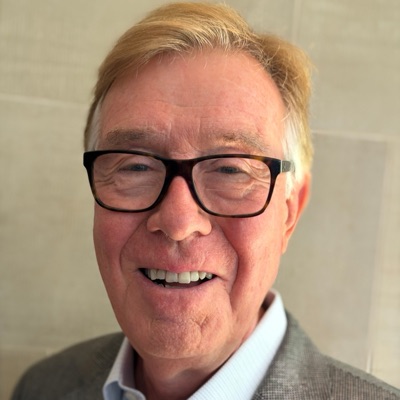
Michael Mitchell
Mr. Mitchell’s career was shaped by an environmental worldview formed during the emergence of the modern environmental movement in the 1960s. While in college during this time, he was particularly influenced by the work of Rachel Carson, Aldo Leopold, Barry Commoner, Ian McHarg, and Garrett Hardin. Collectively, their work helped define the ideas that became central to modern environmentalism: the consequences of toxicity, ecological interdependence, systems thinking, designing with nature, environmental limits, and the challenge of managing resources held in common. Of particular importance to Mr. Mitchell’s later professional work was landscape architect and ecological planner Ian McHarg. McHarg argued that decisions about development should begin with an understanding of the natural systems already operating on the land, and ecological processes should be treated not as externalities to development, but as fundamental constraints and assets. More than half a century later, that principle remains central to MCM Group’s approach to sustainable city, regional and project planning.
Mr. Mitchell founded MCM Group International in 1984 following the Los Angeles Olympic Games, where he had served as Group Vice President responsible for Games planning and budget control. MCM was created to apply environmental, economic, and strategic planning techniques to large-scale international development challenges. Over the following four decades, the firm evolved into an international planning and design organization providing feasibility consulting, strategic planning, architecture, landscape architecture, sustainable design, and development advisory services. Headquartered in Los Angeles, MCM has participated in nearly 2,000 projects around the world. The firm established operations in China in 1999 and today maintains its China headquarters in Beijing. Across its international work, MCM has sought to combine environmental systems thinking with economic feasibility — recognizing that sustainability succeeds at scale only when environmental objectives are integrated into the underlying economics, infrastructure, land-use patterns, institutions, and incentives that shape development.
China has become an increasingly important focus of Mr. Mitchell’s professional work. Among the most significant areas has been rural revitalization, which has emerged as one of China’s major national development strategies. Rural revitalization extends beyond improving agricultural productivity. It seeks to create economically viable communities in which agriculture, tourism, culture, ecological restoration, technology, education, and new industries can reinforce one another while maintaining the environmental and cultural character of rural regions. MCM has participated in more than 200 rural and regional development projects throughout China, developing practical experience in translating these national objectives into projects that can operate at the community level. Among them is the Chongqing Luneng Jiangjin Beautiful Rural Project, which became a national model for integrating rural tourism, cultural heritage, ecological restoration, community development, and the modernization of local industries. The objective is not simply to improve individual villages, but to develop replicable models of environmentally and economically sustainable regional development. MCM’s track record positions it at the forefront of shaping the next generation of rural revitalization in China where innovation, sustainability, and cultural vibrancy intersect to build a more resilient future. MCM provides a full range of services for its rural development projects, including strategic planning and design, economic modeling, design-build implementation, and ongoing operational support. The company has also developed and owns an organic farm and agricultural products business, giving its team direct, practical experience with the same production, market, distribution, and operating challenges faced by its clients.